Article: Egyptian Symbols: Meaning, History, and Uses
Egyptian Symbols: Meaning, History, and Uses
For millennia, Egyptian symbols have transcended time as silent messengers of Egyptian civilization. Engraved in temples like the temple of Karnak, painted on papyri, inscribed in hieroglyphs on sarcophagi and funerary steles, they embody a worldview where the divine, pharaonic power, and eternity converge.
Exploring Egyptian symbols and their meaning is to enter a universe structured by Maât (cosmic order), populated by gods, protective goddesses, solar falcons, and scarabs bearing rebirth. Each emblem has a precise symbolic value—religious, philosophical, political, or cosmic.
As a passionate enthusiast of Egyptian and Mediterranean history and art, a member of the Egyptian royal family, founder of Nilazur, and creator of jewelry inspired by pharaonic art, I offer you a rigorous, embodied reading deeply rooted in the millennial heritage of the Nile. You will discover their origins, their evolution through the dynasties, and their influence on our contemporary craftsmanship.
What are Egyptian symbols?
Definition and role in ancient Egypt
Egyptian symbols are visual signs carrying meaning, used to express religious, political, funerary, and cosmic ideas.
Each form, hieroglyph, or emblem has a precise function in daily life, worship, and pharaonic power.
-
Religious function: the symbol serves to represent gods and goddesses, their attributes, and powers. The Ankh symbolizes divine life, the Tyet protects under the aegis of Isis.
-
Political function: the symbol serves to legitimize sovereignty. The double crown, the scepter, and the Was embody pharaonic authority.
-
Funerary function: symbolic objects are there to guide the deceased to the afterlife. Djed ensures stability, the scarab ensures rebirth, and amulets have protective virtues.
-
Cosmic function: the symbols represent the universal order. Maât guarantees the balance between chaos and harmony, the stability of the world, and the prosperity of the Nile.
Egyptian symbols and hieroglyphs
Hieroglyphs constitute an alphabetic, phonetic, and ideographic writing system. The sacred symbols primarily have a spiritual or cosmic value.
Some symbols (Ankh, Djed, Was / Ouas) become hieroglyphs, retaining their religious or political function while integrating a written language visible on papyri, steles, sarcophagi, and monuments.
16 Egyptian symbols: meaning and uses
1. Ankh (Looped Cross / Key of Life) – Eternal life

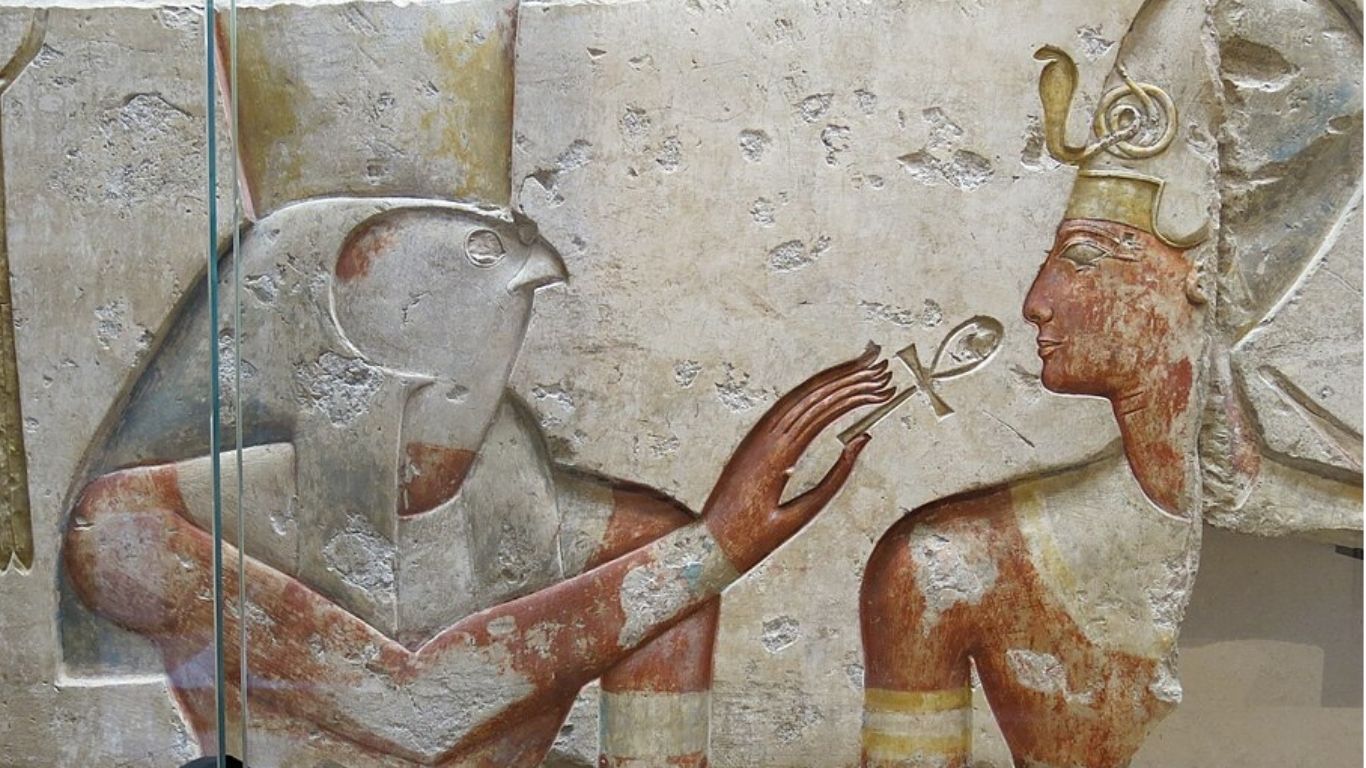
Detail of a painted bas-relief showing Pharaoh Ramses II receiving the ankh — symbol of eternal life — from the temple of Abydos, now kept at the Louvre Museum. Image: André Alliot – Louvre Museum
Meaning: Life, divine breath, immortality.
Mythological context: Worn by gods like Isis or Re, it symbolizes the transmission of life to humans and pharaohs.
Ancient use: Carved on temples, held by deities facing the king.
Universal influence today : Very present in jewelry, spiritual movements, Afro-diasporic cultures, and alternative symbolism. It represents the universal idea of continuity and connection to the sacred.
2. Eye of Horus (Oudjat) – Protection and healing

Meaning : Protection, integrity, and healing. Not to be confused with the Eye of Re, a solar symbol associated with the power and strength of the sun. The Eye of Horus primarily refers to protection, restoration, and balance.
Mythological context : Eye lost then restored during Horus's battle against Seth. This myth establishes its symbolic value of regeneration and repair.
Ancient use : A major protective amulet, used in funerary rituals and daily life to preserve health and ensure safety.
Modern use : A good luck charm and symbol of personal protection, very present in jewelry and contemporary spiritual practices.
Today, the protective eye, the eye against the evil eye, is found in many countries around the Mediterranean basin, notably in Turkey, the Maghreb, the Levant, and Greece, where it is integrated into local traditions as a symbol of protection against the evil eye. This spread reflects the ancient circulation of symbolic representations through Mediterranean cultural exchanges.
The story of Nilazur's Eye of Horus medallion
When I visited Upper Egypt for the first time, I was nine years old. Among the most memorable memories of this trip, there is one that has never left me. A few kilometers from Luxor, near the Valley of the Kings and the Valley of the Queens, lies Deir el-Medineh: the village where the artisans responsible for decorating the pharaohs' tombs lived.

On the walls appeared the great protective symbols of Egyptian mythology, including the Eye of Horus. I remember being fascinated by this ancient gaze, both mysterious and protective. For years, this symbol never really left me. I often drew it in my notebooks and sketches, almost instinctively. Much later, during a stay in Cairo, I took a jewelry design course with sketches and the idea for my first piece inspired by the Eye of Horus: a medalliona circle evoking the symbol of the Shen, circle of eternity in the Egyptian tradition, at the center of which is placed the Protective Eye.
We then brought the medallion to life in solid silver, in the workshop of a jeweler friend whose family has worked for generations in the Khan el-Khalili souk, in the heart of historic Cairo. The craftsmanship of these artists gave life to this design born from a childhood memory. This is how this Horus bracelet I present to you below was born.

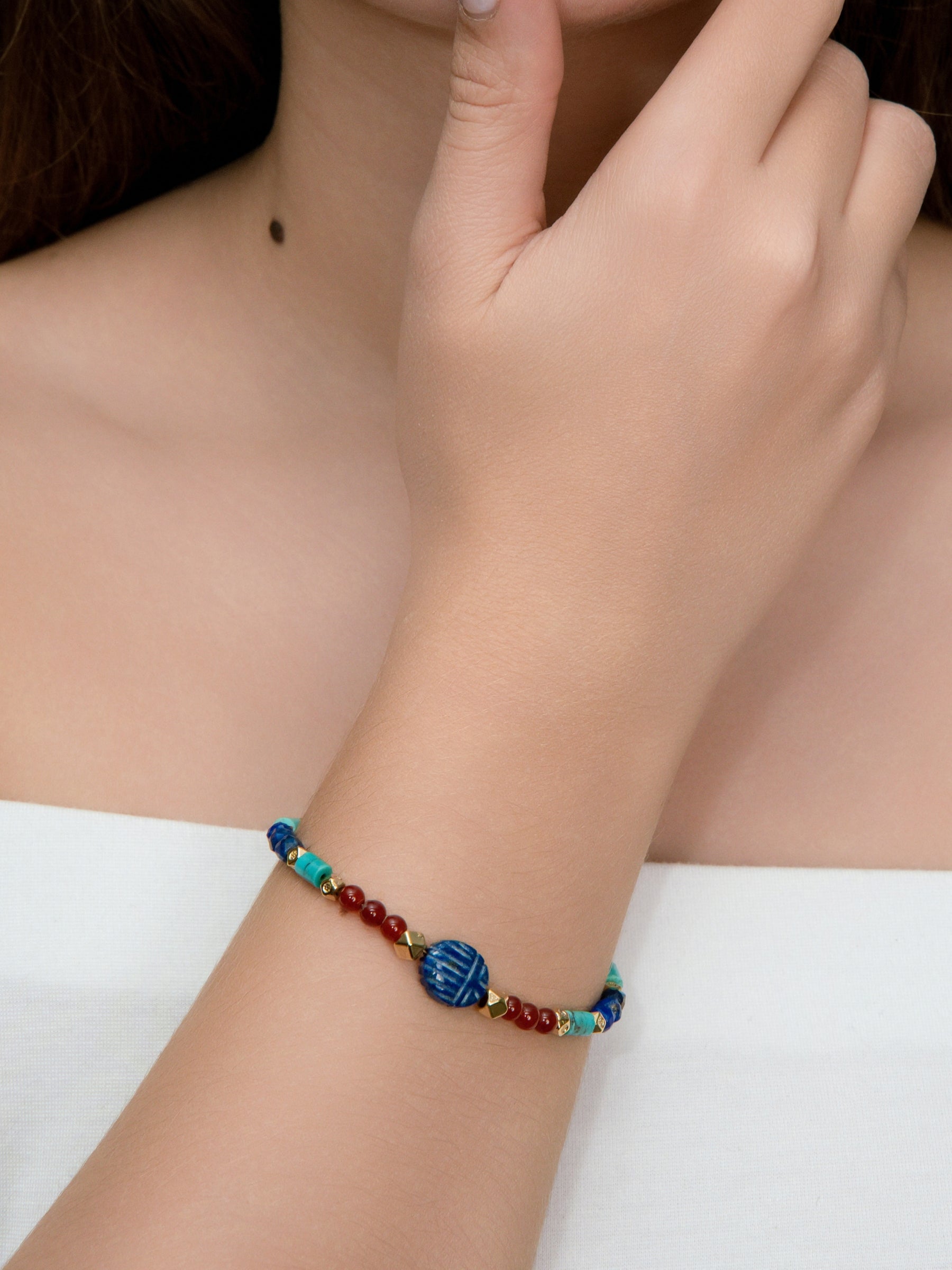
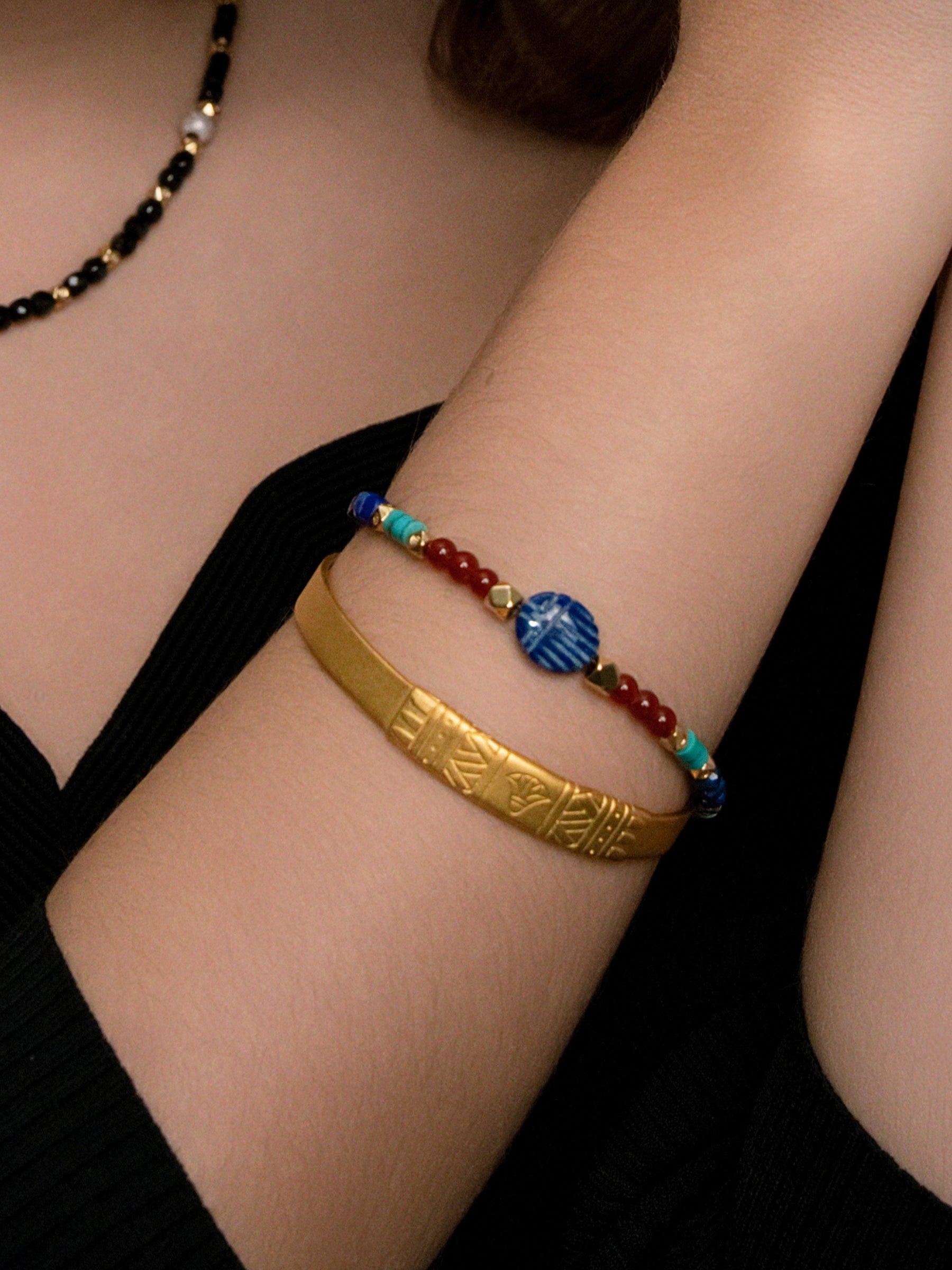
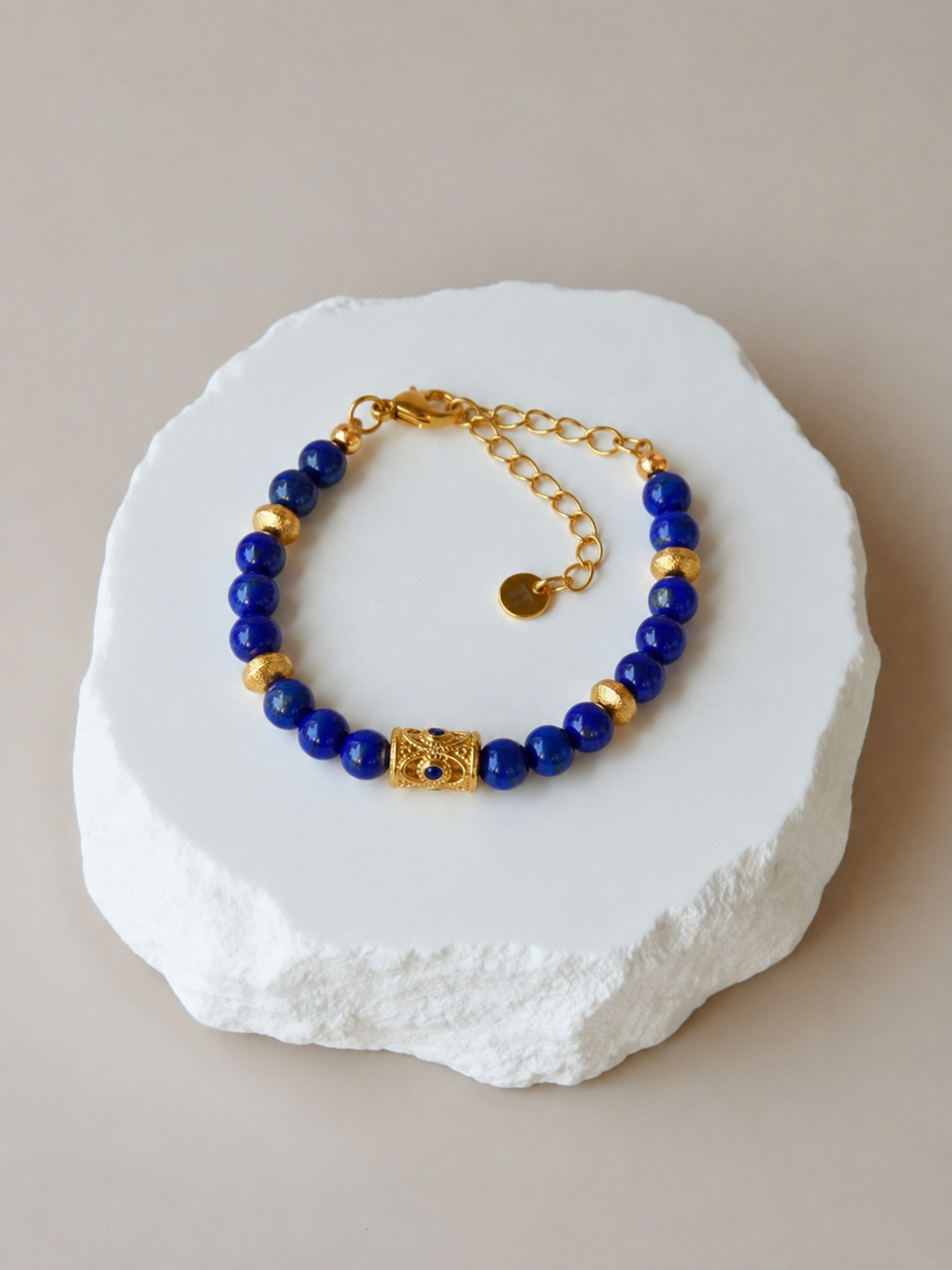
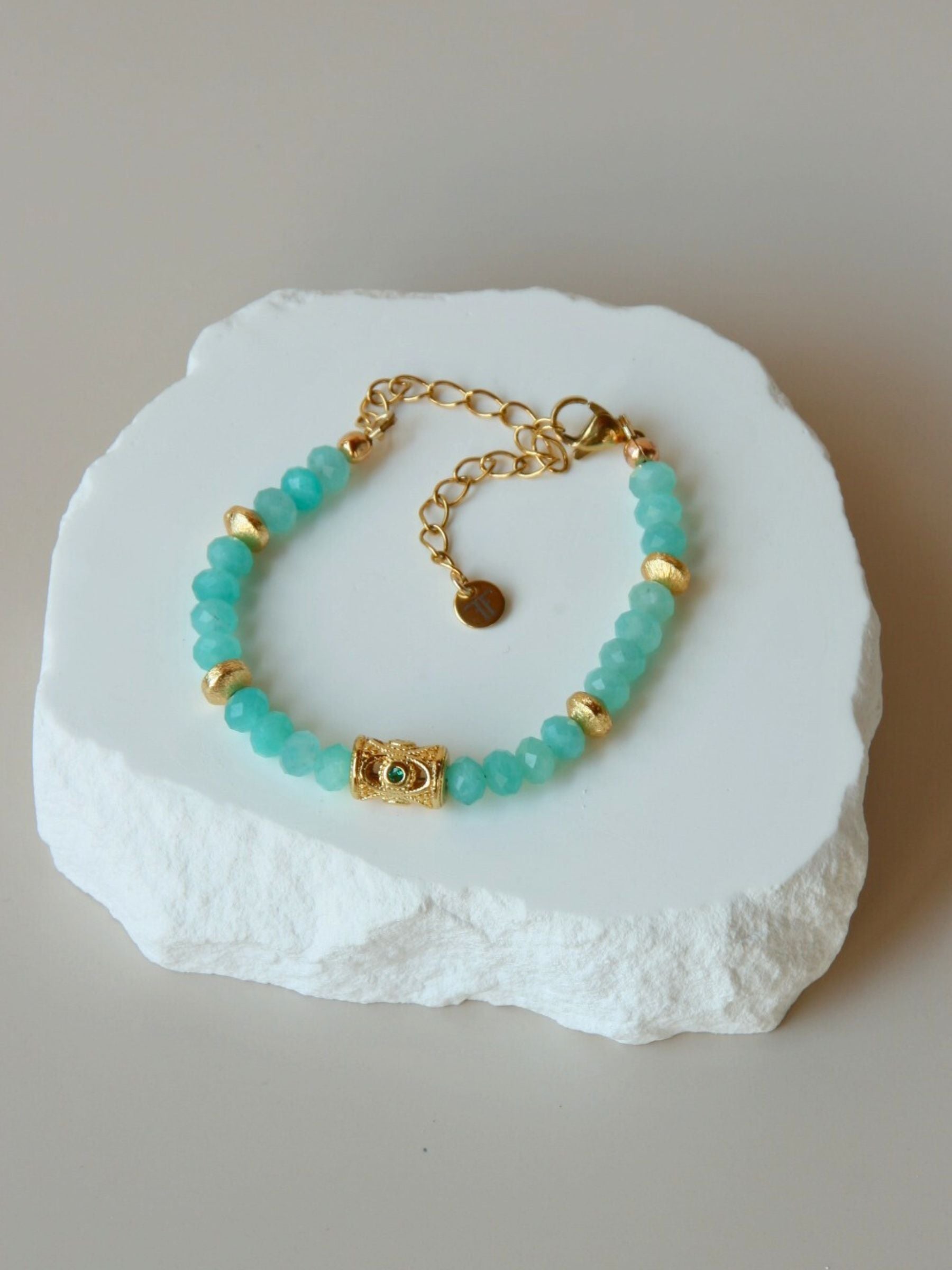
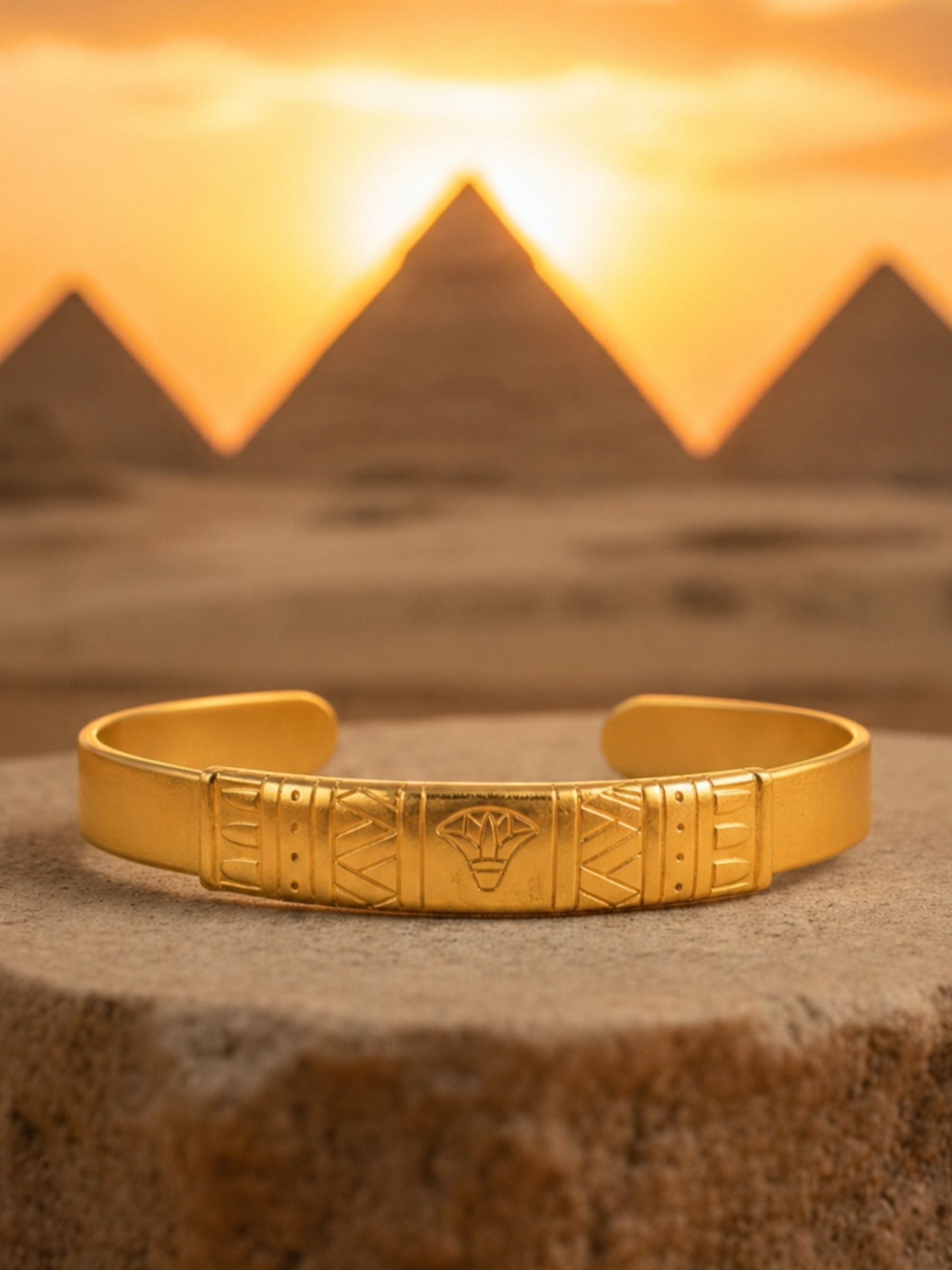
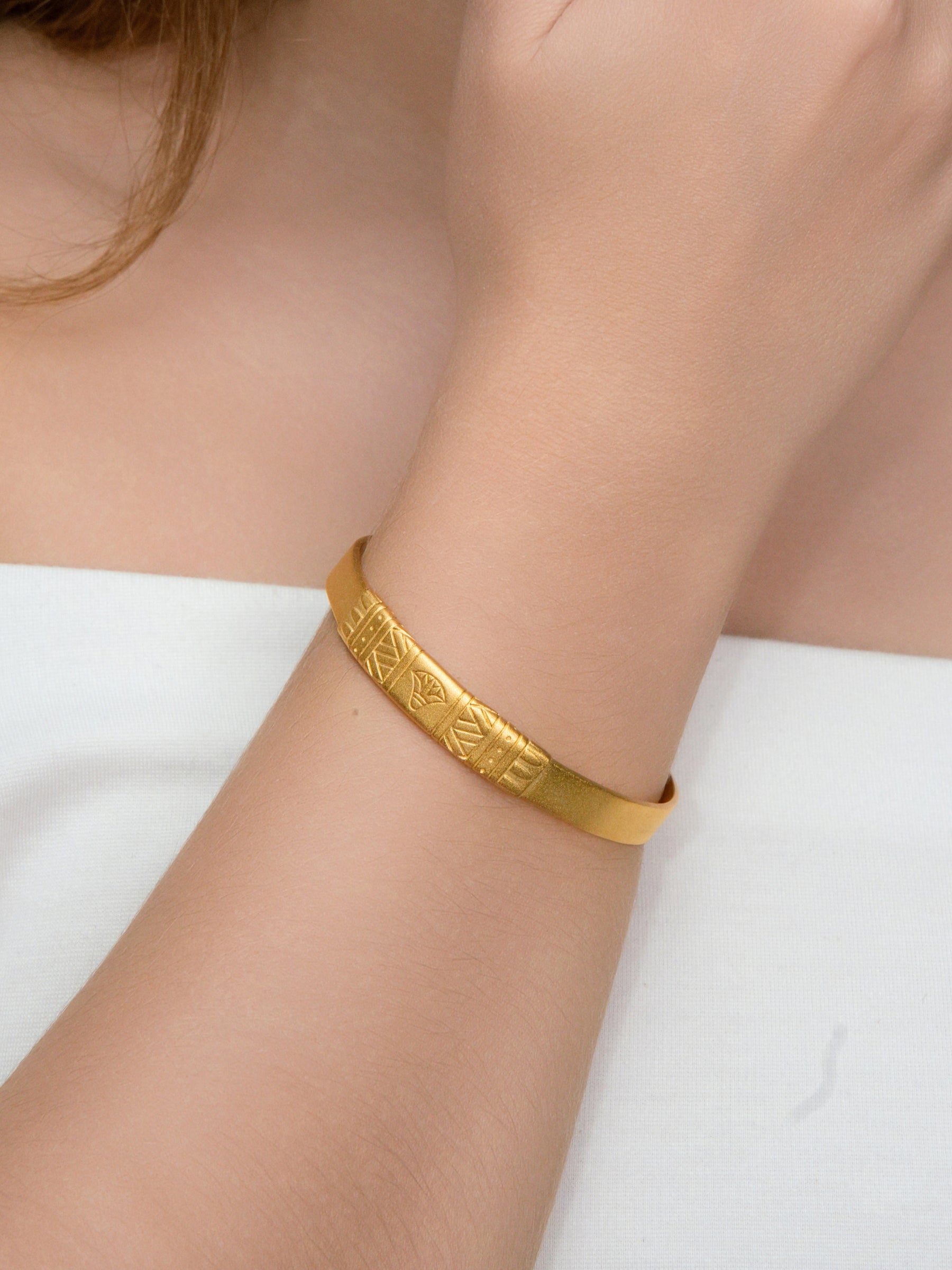
Below you will discover some of my creations inspired by the Eye of Horus, made in the spirit of Egyptian art and designed as contemporary talismans.
 |
 |
 |
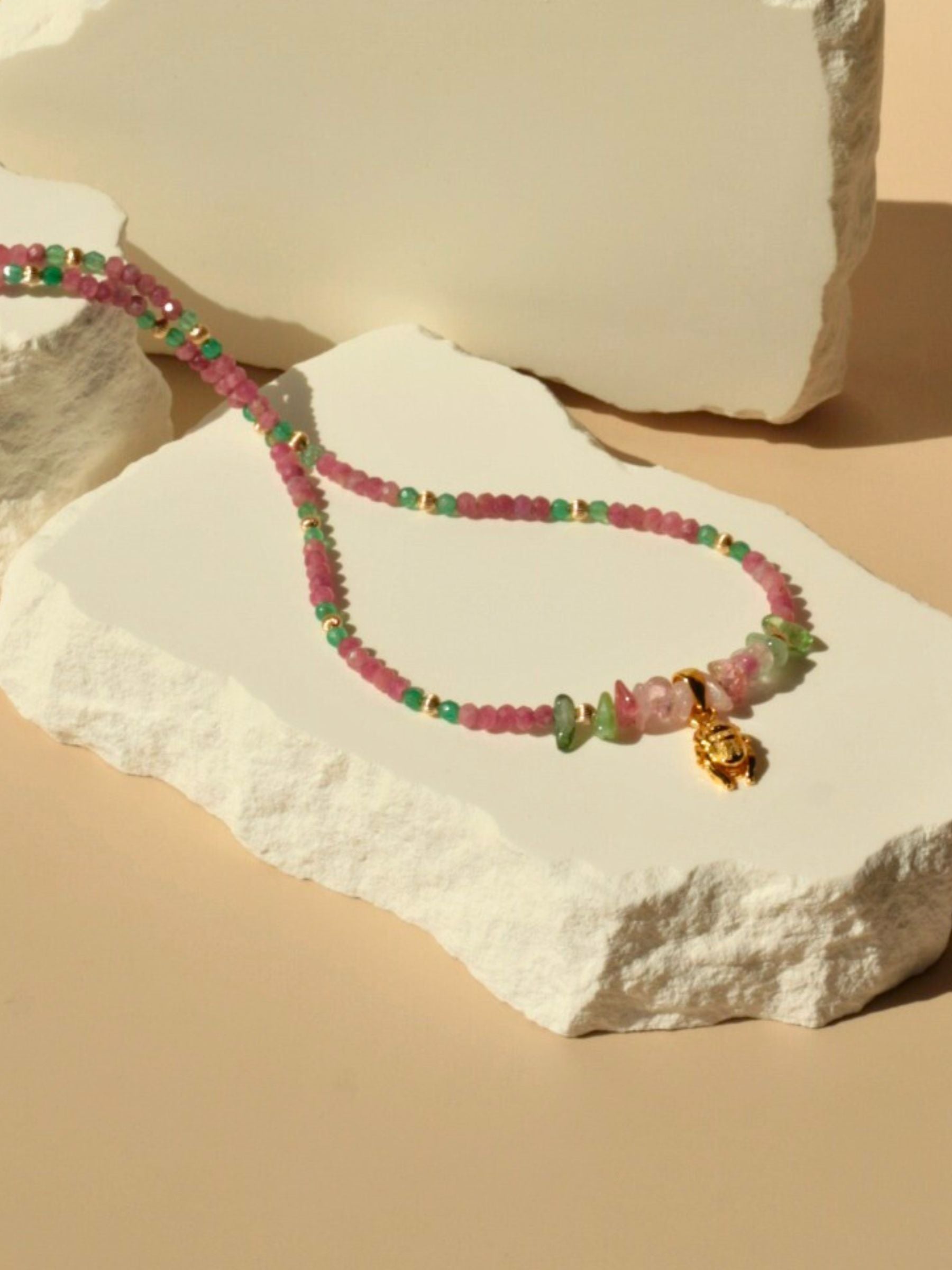
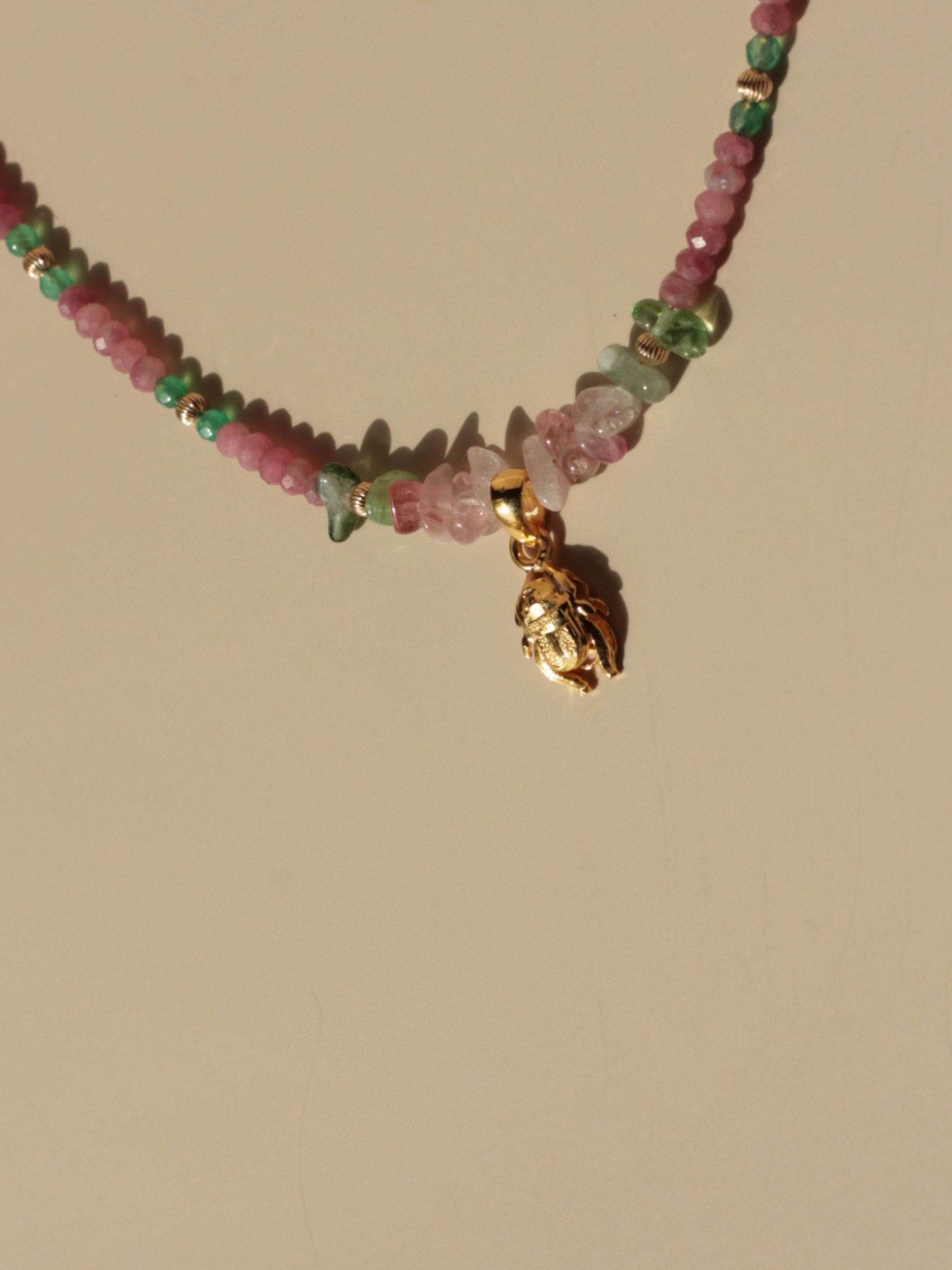
3. Scarab – Rebirth

Meaning : ttransformation and cycle of regeneration.
Mythological context: associated with Khepri, the morning form of the sun.
Ancient use : placed in mummy wrappings and used as an administrative seal.
Universal influence today : symbol of personal renewal, often used in jewelry, decorative art, and concepts of inner transformation.
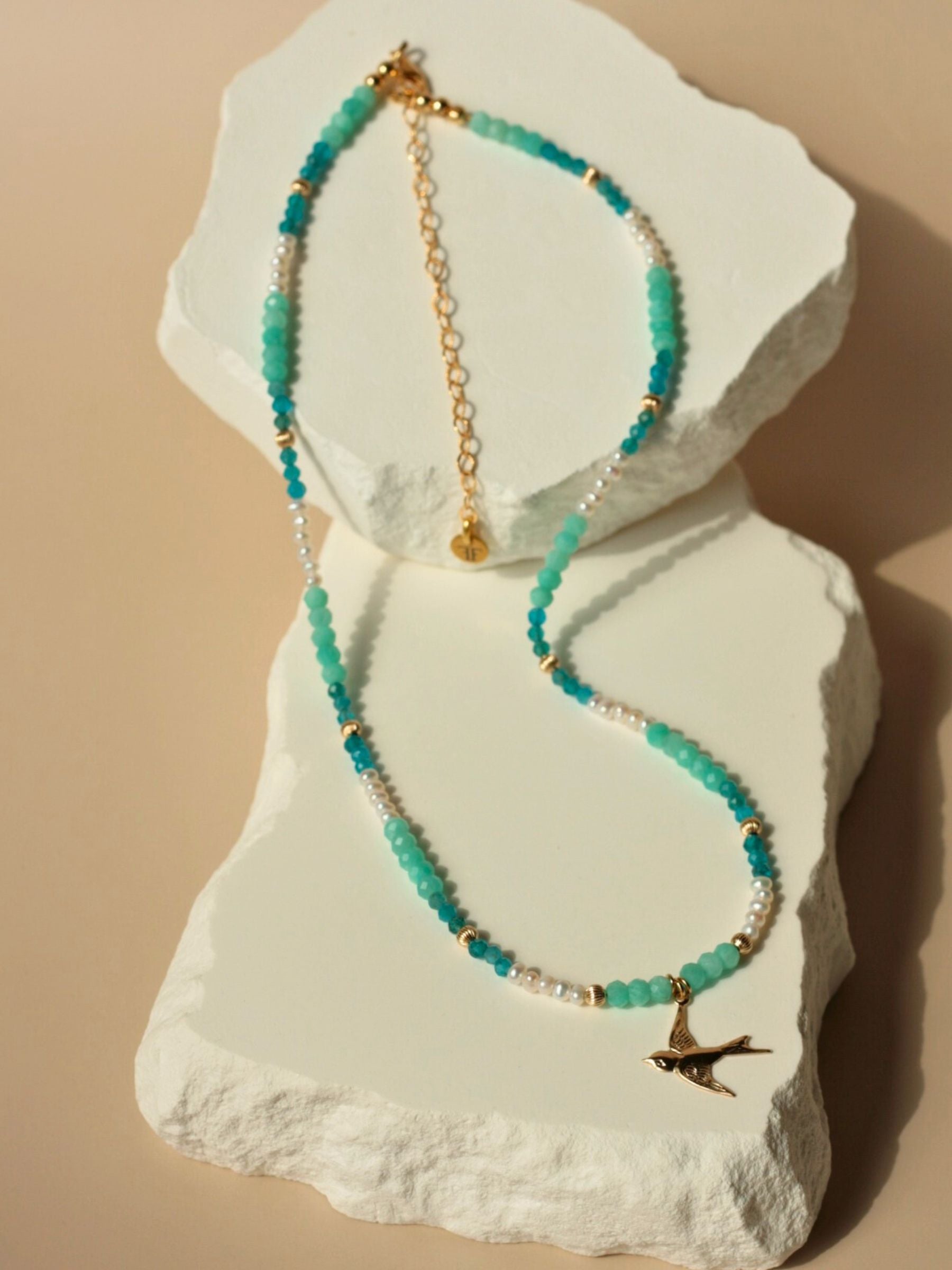
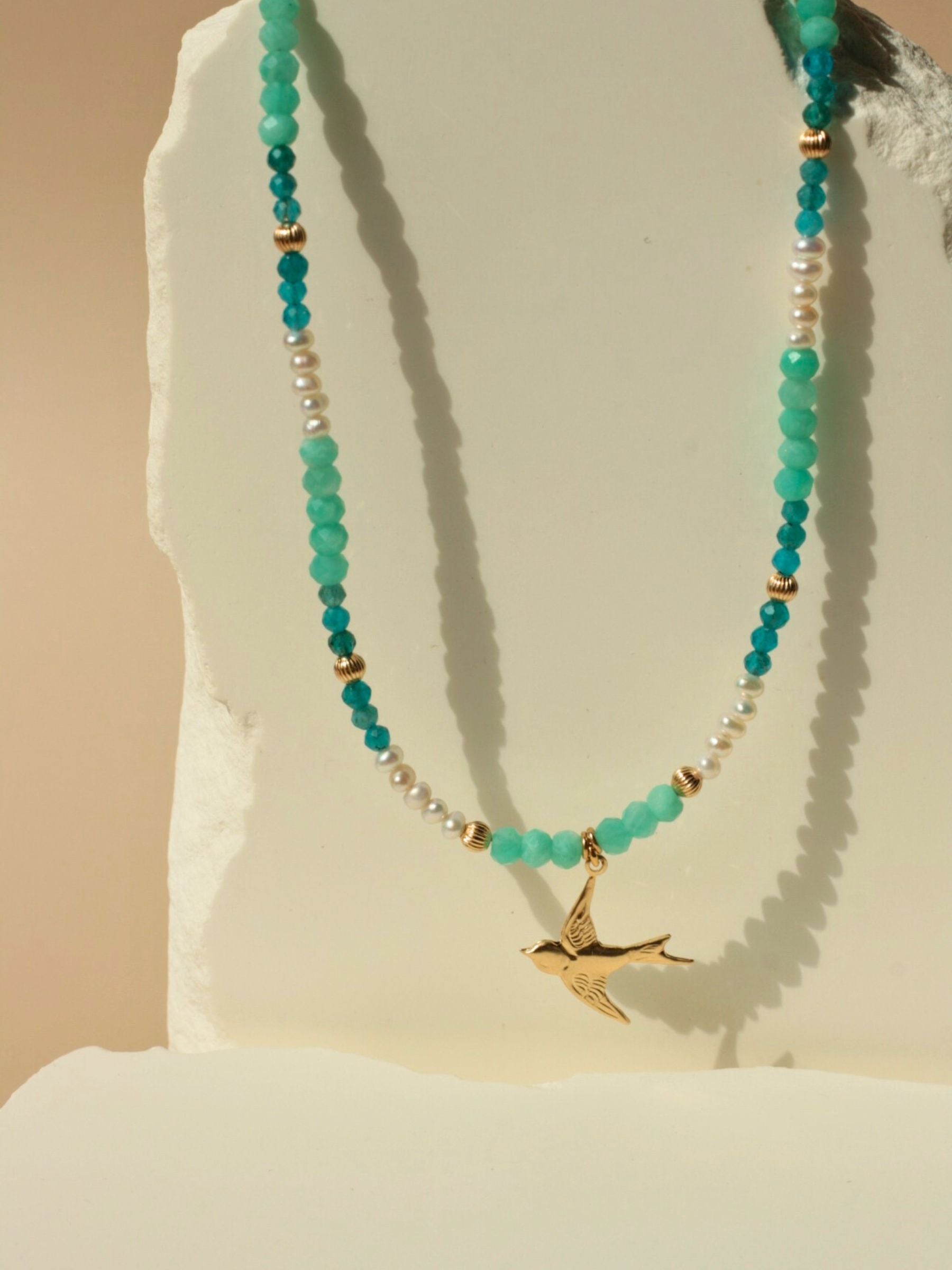
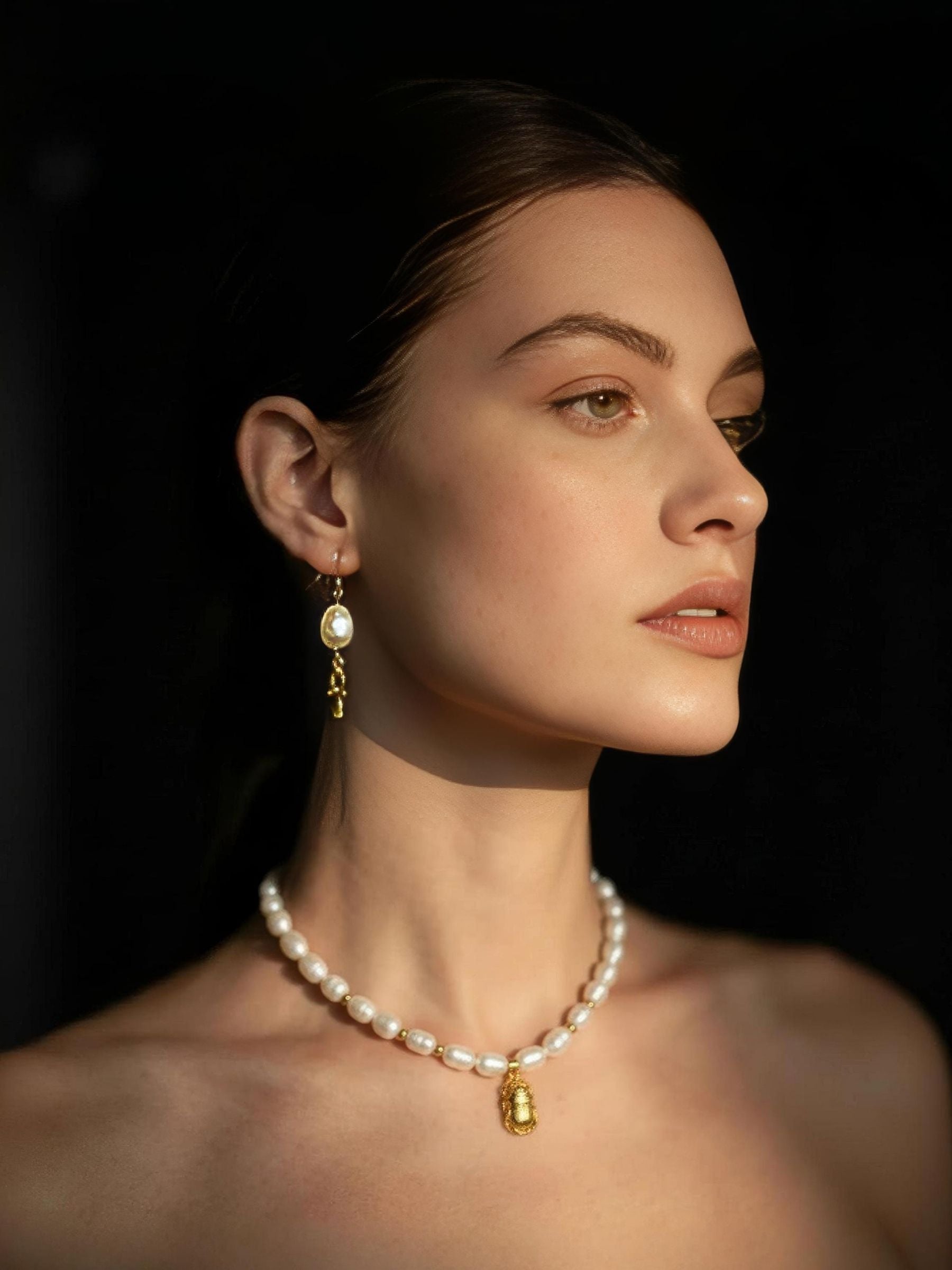
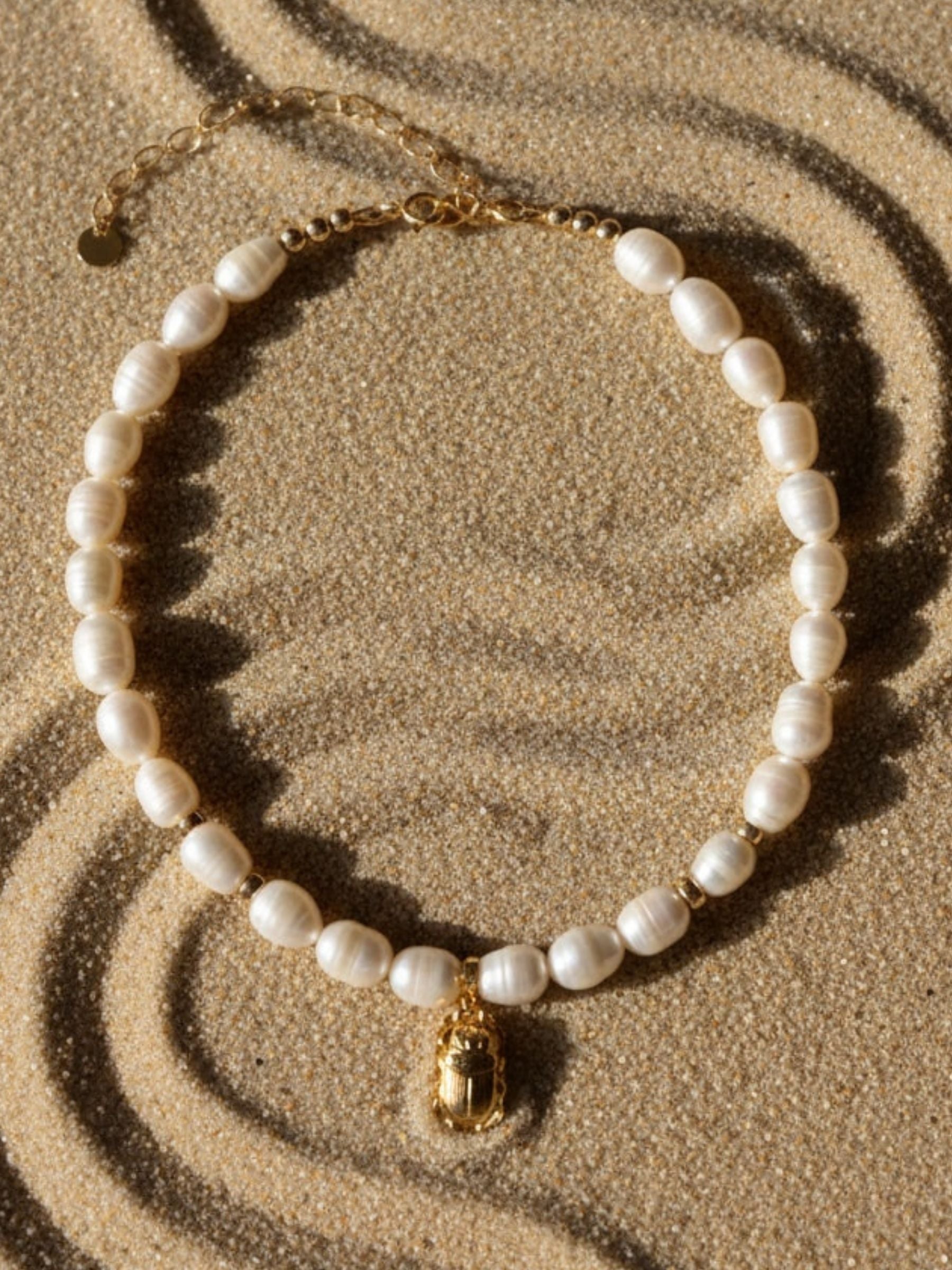
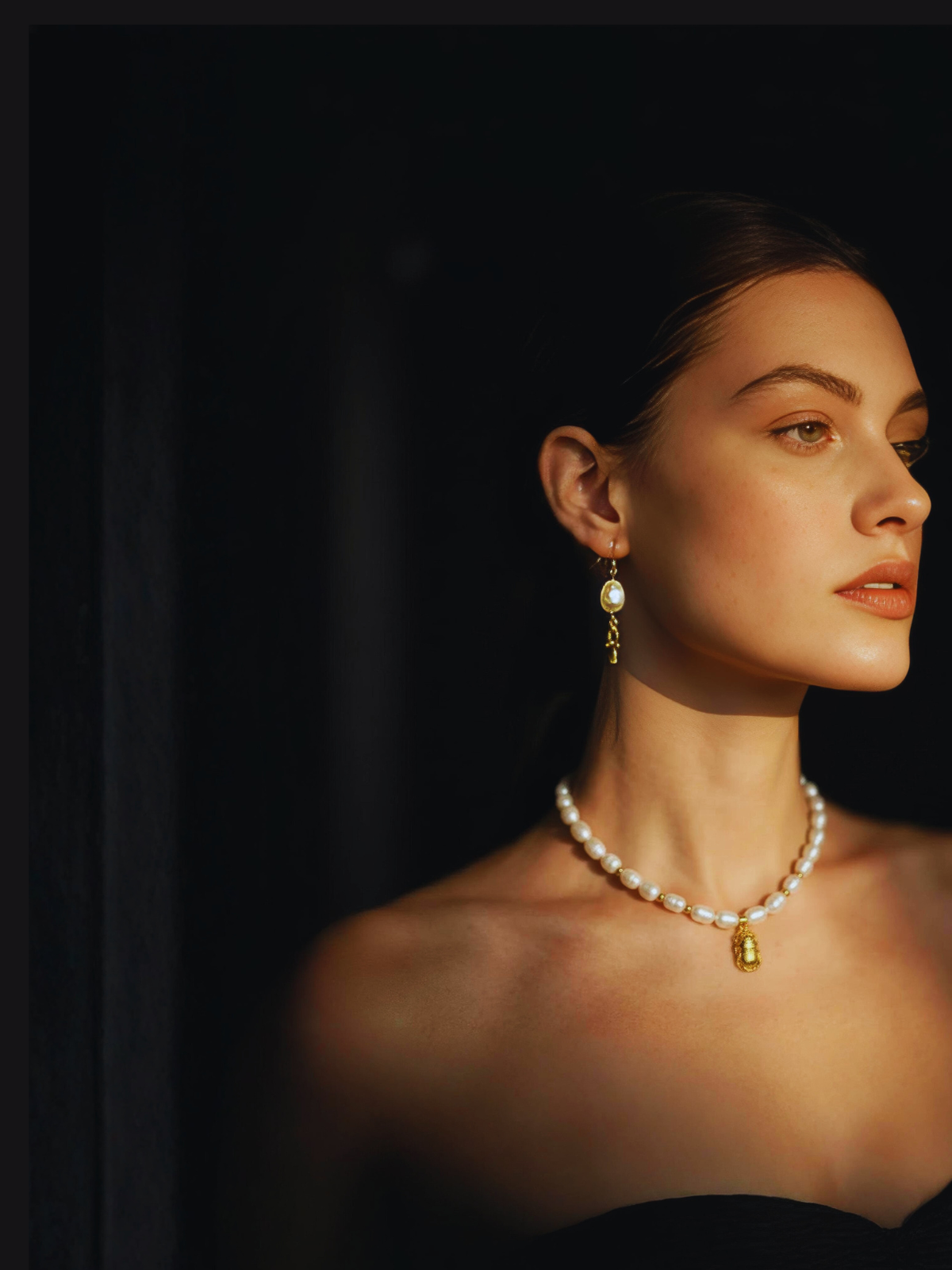
Below you will discover some of Nilazur’s creations on the theme of the Scarab
 |
 |
 |
4. Djed Pillar – Stability

Meaning: Stability, endurance, and permanence.
Mythological context : Linked to Osiris, it represents the symbolic spine of the god.
Ancient use : Present in funerary rituals and sacred inscriptions.
Universal influence today : Used as a symbol of grounding and resilience in contemporary art and spiritual design.
5. Tyet (Isis Knot) – Feminine Protection

Meaning : Maternal protection and protective magic.
Mythological context : Associated with Isis.
Ancient use : Protective funerary amulet.
Universal influence today : Strong symbol in movements related to feminine spirituality and family protection.
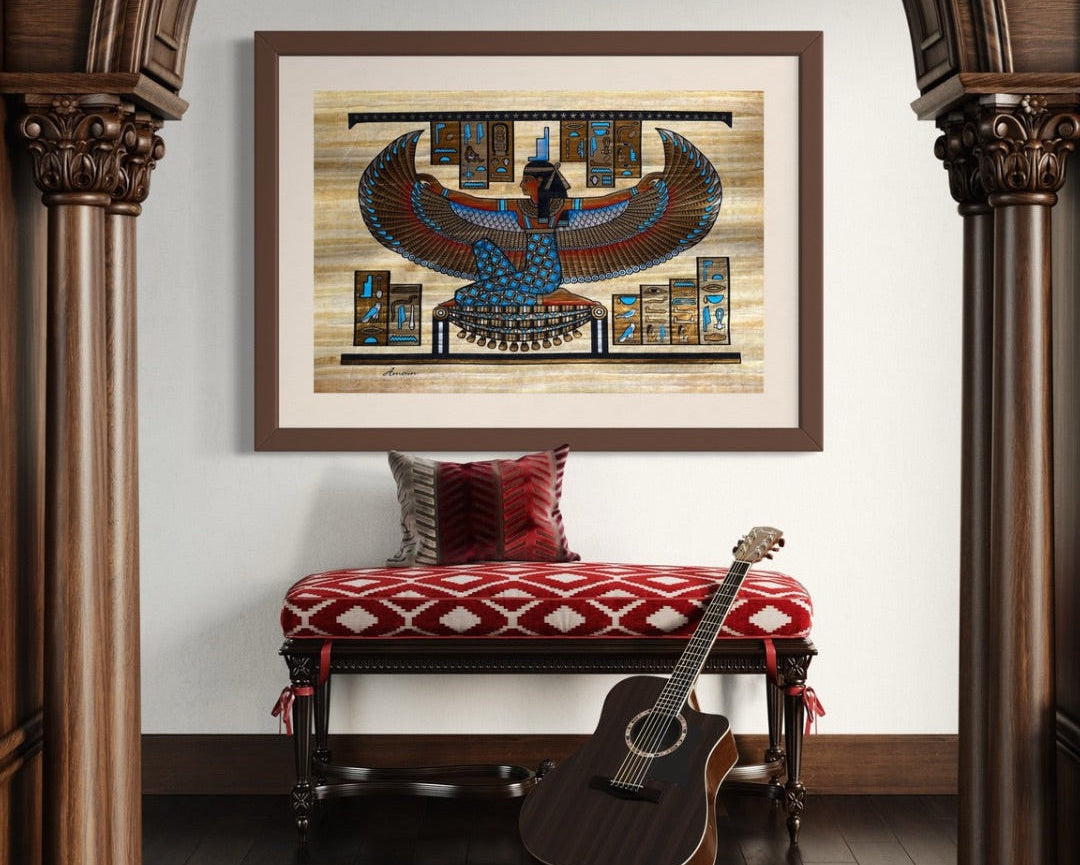
This symbol is closely associated with the goddess Isis, a major protective figure in Egyptian mythology and embodiment of feminine power. The role of the feminine in ancient Egypt fascinates me deeply: goddesses, queens, and mothers held an essential spiritual and symbolic role. To highlight this dimension, I created a collection of contemporary papyri inspired by Egyptian art, celebrating the beauty, protection, and strength of the sacred feminine – as in this papyrus depicting the goddess Isis.

6. Shen – Eternity

Shen amulet, circular symbol representing eternity and protection in Egyptian mythology. Used here as a clasp, demonstrating the importance of symbols in everyday objects.
Meaning : Infinity and protection of the name.
Mythological context : Circle surrounding the royal cartouche to preserve identity eternally.
Ancient use : Graphic base of the cartouche.
Universal influence today: Motif reused in jewelry as a symbol of eternity and endless cycle.
7. Ouas Scepter – Power

Meaning : Divine authority and domination over chaos.
Mythological context : Scepter carried by gods and pharaohs.
Ancient use : Represented in royal iconography.
Universal influence today : Evokes leadership, symbolic power, and authority in design inspired by ancient Egypt.
8. Lotus – Rebirth

Detail of a lotus flower, excerpt from the Atlas of Egyptian Art History by Émile Prisse d’Avesnes, a pioneer of Egyptology whose surveys and drawings greatly contributed to the transmission and documentation of Egyptian art in the 19th century.
Meaning: Purity, emergence, creation, and renewal
Mythological context : Flower linked to the birth of the sun.
Ancient use : Architectural decoration and cosmic symbol. Elixirs, perfumes, iconography for jewelry
Universal influence today : Widely used in Asian and Western spiritualities as a symbol of awakening and inner growth, indicating symbolic convergence between civilizations.

9. Uraeus (Cobra) – Sovereignty

Meaning : Royal protection and vigilance.
Mythological context : Sacred cobra associated with the pharaoh's legitimacy.
Ancient use : Adorns royal crowns.
Universal influence today: Reinterpreted in fashion, design, and jewelry as a symbol of power and strong identity.
10. Maât's Feather – Truth

Meaning : Justice, balance, and ethics.
Mythological context : Attribute of Ma'at during the weighing of the heart.
Ancient use : Depicted in scenes of the judgment of the dead.
Universal influence today : Moral symbol used in contemporary discourse on fairness, social justice, and personal integrity.

11. Scepter (nekhekh) and Flail (heqa) – Royalty

Photo: Yann Caradec – Wikimedia Commons
Meaning : Supreme authority and political power.
– the scepter of supremacy
– the flail symbolizing the ability to separate wheat from chaff
Mythological context : Attributes linked to divine legitimacy, notably associated with Osiris and then the pharaohs.
Ancient use : Crossed over the chest of royal statues.
Universal influence today : Icon of ancient power, reused in art, cinema, and high-end artisanal creations.
12. Cartouche – Name protection

Meaning: Eternal preservation of identity.
Ancient use : Framing of the royal name on monuments.
Universal influence today : Widely used in personalized jewelry, as it represents the universal idea of protected memory and identity.
13. Hippopotamus – Maternal protection
Meaning : Protective strength and fertility.
Mythological context : Associated with Taweret, protector of childbirth.
Ancient use : Amulets related to maternity.
Universal influence today : Symbol of feminine power and family protection.

14. Heart – Conscience
Meaning : Moral memory and inner truth.
Ancient use: Weighed against Ma'at's feather during the judgment of the dead.
Universal influence today : Represents authenticity, personal responsibility, and introspection in contemporary culture.

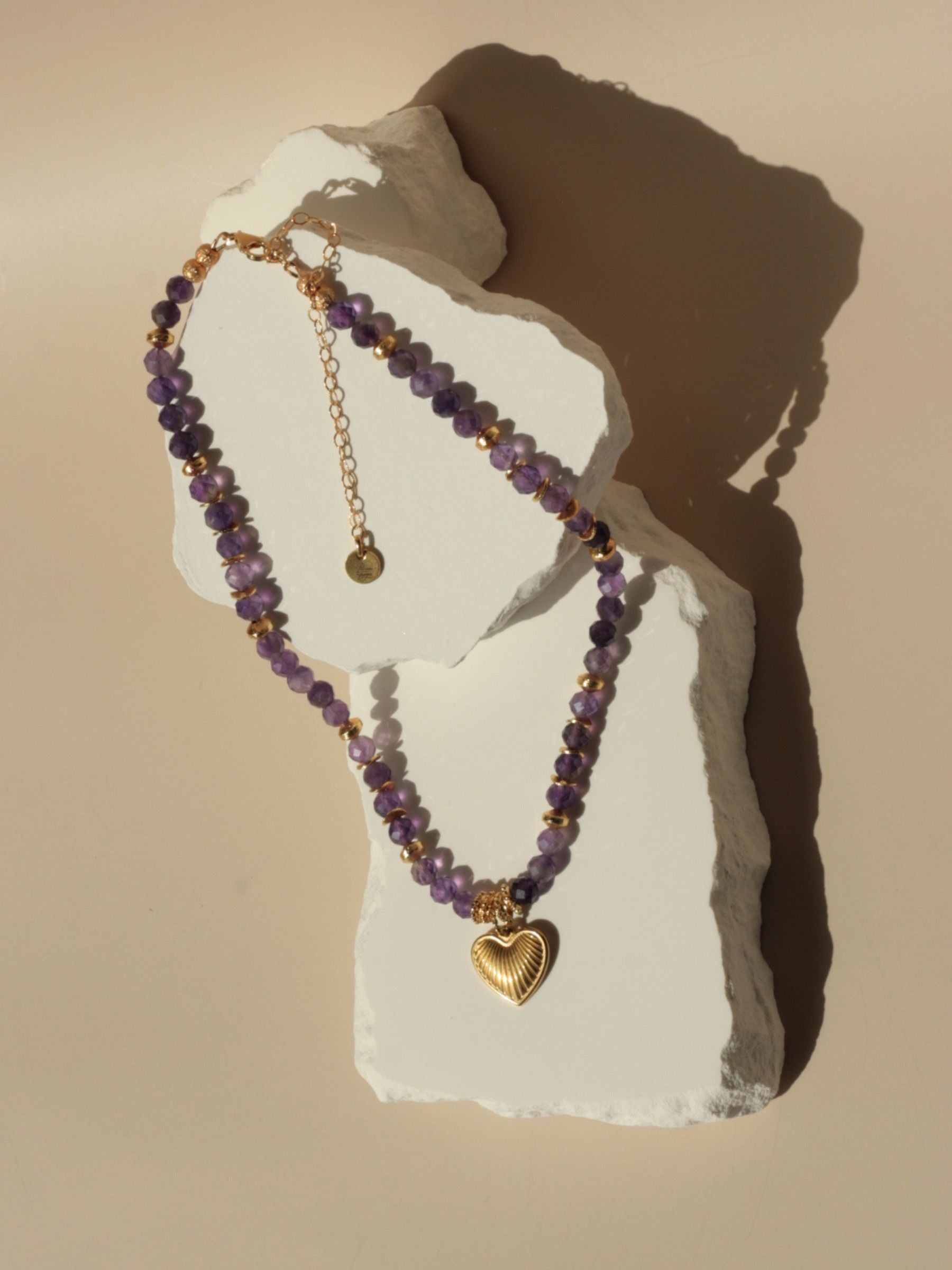
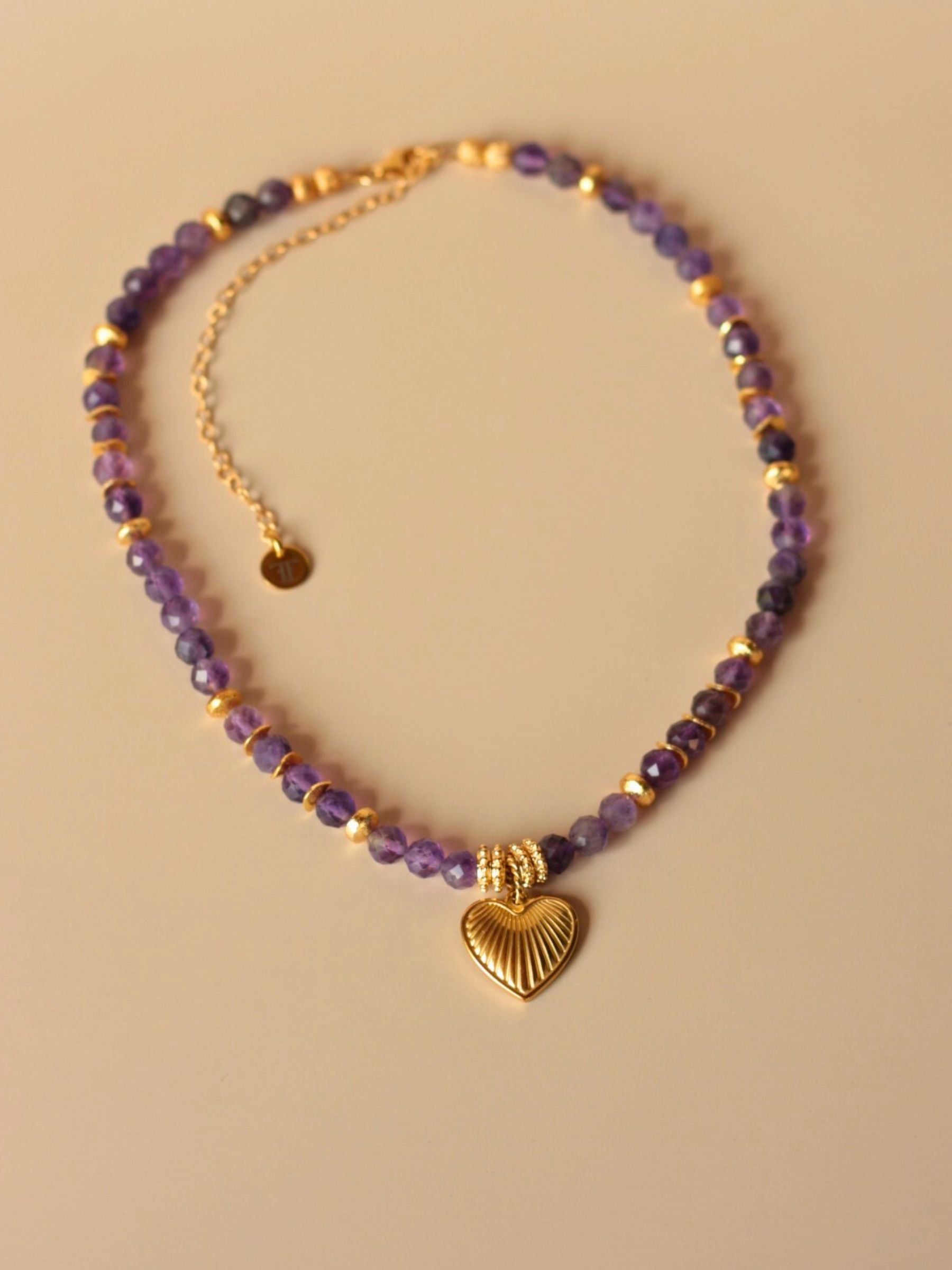
Heart-shaped amethyst necklace, stone of balance and serenity, inspired by the Egyptian tradition where minerals were used as protective talismans. © Nilazur
15. Sacred tree – Life cycle

Funerary scene depicting the sacred tree in the tomb of Sennedjem, at Deir el-Medineh (Thebes), where the sycamore associated with the goddess Hathor appears as a source of protection, nourishment, and regeneration for the deceased in the afterlife.
Source: World History Encyclopedia
Meaning : Connection between worlds and spiritual growth.
Mythological context : Sacred sycamore linked to Hathor.
Ancient use : Present in tombs and funerary frescoes.
Universal influence today : Worldwide symbol of nature, ecological balance, and spiritual grounding.

16. Aton (Sun) – Creative energy
Meaning : Life force and cosmic cycle.
Mythological context : Incarnation of Ra and central in the cult of Aton.
Ancient use : Solar disk dominating royal iconography.
Universal influence today : Cross-cutting symbol used in ecology, spirituality, personal development, and solar energy movements.
Overview of the 16 most powerful Egyptian symbols
|
|
Symbol |
Meaning |
Mythological context and ancient use |
Modern use |
|
|
Ankh |
Eternal life, Divine breath |
Associated with Isis and Ra. Engraved in temples, held by gods facing pharaohs |
Jewelry, symbol of continuity and sacred identity
|
|
|
Eye of Horus |
Protection and healing |
Eye restored after Horus’s battle against Seth. Protective amulet |
Protection against the evil eye |
|
|
Beetle |
Rebirth and transformation |
Placed in mummy wrappings and used as a seal |
Symbol of personal renewal and transformation |
|
|
Djed |
Stability and permanence |
Connected to Osiris. Present in funerary rites and temples |
Symbol of grounding and resilience |
 |
Tyet (Isis Knot) |
Maternal protection |
Associated with Isis. Protective funerary amulet |
Symbol of feminine and family protection |
|
|
Shen |
Eternity and protection of the name |
Circle surrounding the royal identity. Graphic base of the cartouche |
Eternity motif in jewelry and design |
|
|
Was |
Authority and divine power |
Scepter of gods and pharaohs. Represented in royal iconography |
Symbol of leadership and legitimacy |
|
|
Lotus |
Rebirth and purity |
Flower linked to cosmic birth. Architectural and religious decoration |
Universal symbol of spiritual awakening |
|
|
Uraeus |
Sovereignty and vigilance |
Sacred cobra linked to royal protection. Placed on the crowns of pharaohs |
Icon of power in fashion and art |
|
|
Feather of Ma'at |
Truth and justice |
Attribute of Ma'at during the judgment of souls. Scenes of the funerary judgment |
Symbol of ethics and personal balance |
|
|
Scepter and Flail |
Royal power and authority |
Linked to legitimacy. Associated with Osiris. Crossed over the chest by pharaohs |
Strong image of ancient power in contemporary art |
|
|
Cartouche |
Name protection |
Frame protecting royal identity. Engraved on monuments and steles |
Personalized jewelry and identity memory |
 |
Hippopotamus | Maternal protection |
Associated with Taweret. Amulets linked to motherhood |
Symbol of feminine strength and family protection |
|
|
Heart (Ib) |
Consciousness and inner truth |
Weighed against the feather of Ma'at. Heart scarabs placed in mummies |
Representation of authenticity and moral responsibility |
|
|
Sacred tree |
Life cycle and growth |
Nourishing sycamore associated with Hathor. Present in frescoes |
Global symbol of grounding and natural balance |
|
|
Sun |
Creative energy and cosmic cycle |
Incarnation of Ra and central in the cult of Aton. Solar disk |
Universal symbol of vitality and rebirth |


Origin and evolution of Egyptian symbols
Predynastic period and early dynasties
The first symbols appear as early as the predynastic period, engraved on pottery, steles, or ceremonial palettes, expressing religious, political, and funerary concepts before complete hieroglyphic writing.
With the early dynasties, they stabilize, identify rulers, and convey cosmic values.
Old, Middle, and New Kingdoms
-
Old Kingdom: sober, precise symbols linked to pyramids and funerary temples.
-
Middle Kingdom: graphic refinement, standardization of motifs.
-
New Kingdom: centralization of religious symbolism, hieroglyphs codified for rituals, offerings, and royal names.
Akhenaton's Reform

Akhenaton established the exclusive cult of the solar disk Aton. Traditional divine representations faded in favor of solar motifs and stylized human figures, symbolizing a spiritual and artistic renewal.
Greco-Roman period
Fusion of Egyptian symbols and Greek iconography. Deities like Isis spread throughout the Mediterranean basin, retaining their protective power and illustrating the universality of Egyptian thought.
Modern rediscovery
In the 19th century, Napoleon in Egypt and Champollion (decipherer of hieroglyphs thanks to the Rosetta Stone) revealed the meaning of thousands of sacred signs. This marked the beginning of modern Egyptology, allowing the understanding of the historical, religious, and artistic role of the symbols.

Rosetta Stone, text in hieroglyphs, demotic, and ancient Greek, which allowed Jean-François Champollion to decipher Egyptian writing. © Hans Hillewaert - Wikimedia (CC BY-SA 4.0)
Where can these symbols be found in Antiquity?
Temples and sanctuaries
Egyptian symbols are present in almost all temples and sanctuaries, notably:
-
Karnak : on the columns and walls engraved telling the story of the pharaohs and gods.
-
Abu Simbel : Ramses II asked artisans to immortalize sovereignty and divine protection through monumental statues and symbolic bas-reliefs.

Royal tombs
Many symbols are found in royal tombs but also in those of Egyptians, notably those dedicated to architects, notables, and artisans. For example:
-
In the Valley of the Kings : hieroglyphs and funerary frescoes guiding the deceased to the afterlife.
-
In the Tomb of Tutankhamun : sarcophagi, chests, and stelae covered with protective symbols and magical formulas.
-
In the Valley of the Queens : tomb of Nefertiti decorated with painted bas-reliefs using pigments that have lasted through the ages.
Funerary amulets and jewelry
These symbols are also used on the objects that the dead take with them on their journey to the afterlife.
-
The Scarab, for rebirth.
-
The Eye of Horus, for protection and healing.
-
The Feather of Maât, for justice and cosmic order.
The Book of the Dead gathers all the symbols for the survival of the soul and the respect of rituals to be followed so that the soul safely reaches the place where it will be judged, in the court of Osiris.

Why do Egyptian symbols still fascinate today?
-
Egyptian symbols still fascinate today because of their deep connection to the idea of the soul’s continuity and existence. They embody a universal quest for permanence in the face of time and disappearance.
-
The mystery of the afterlife and the richness of Egyptian funerary rites also fuel this fascination. They reveal a structured and spiritual vision of the passage between worlds, where each symbol accompanies the deceased in their transition.
-
Their universal and timeless dimension allows them to cross cultures and centuries without losing their meaning or symbolic power.
-
Finally, their artistic strength, based on simple, balanced, and instantly recognizable forms, continues to inspire contemporary art, design, and craftsmanship worldwide.
Egyptian symbols and modern spirituality
Today, Egyptian symbols go beyond their historical context to fully integrate into contemporary spiritual practices and personal expressions of balance and protection.
-
Esotericism and energy: Ankh, Eye of Horus, Djed for meditation and protection.
-
Symbolic tattoos: Scarab, Ma’at Feather, Ka embodying protection and vital force.
-
Good luck charms and decoration: Uraeus, Tyet, Shen life key for home, luck, and love.


They retain their ancient meaning while finding contemporary resonance.
Where can Egyptian symbols be found today?
In the 20th century, Egyptian symbols experienced a revival with Art Deco, especially after the discovery of Tutankhamun's tomb. Lotus, scarabs, and solar motifs then inspired architecture and design, giving rise to an “Egyptian Revival” movement that extended the influence of ancient Egypt into the modern era.

Source: The Metropolitan Museum of Art (Public Domain)

Detail of the Chrysler Building, New York, an Art Deco masterpiece whose geometric shapes and stylized motifs are inspired by the Egyptian revival of the early 20th century.
Photo: Wikimedia Commons
Egyptian symbols continue to circulate in many contemporary fields, demonstrating their cultural transmission and adaptation to modern uses.
-
Jewelry and craftsmanship : Eye of Horus pendants, scarabs and Ankh, within, for example, my collection of Egyptian jewelry and Talisman Jewelry
-
Architecture and design : Obelisks modern and Art Deco motifs inspired by Karnak and Luxor.
-
Popular culture: Cinema, video games, and graphic design incorporating hieroglyphs and symbols.
-
Modern spiritual movements: New Age, meditation, yoga, and space harmonization.
Understanding the meaning of Egyptian symbols allows one to fully appreciate the richness of ancient Egypt and to draw inspiration from this art for modern crafts, decoration, and spirituality.
As a specialist in Egyptian history and art and as an artisan, I place each creation within a living and universal cultural continuity. The Egyptian symbols I choose are not mere decorative motifs: they carry a cosmopolitan collective memory, an energy and an intention deeply rooted in the protective heritage of the Nile.
I design my jewelry around natural stones with protective symbols, then have the elements made in precious metals such as 925 silver, in Cairo, in collaboration with master artisans from Khan el-Khalili. Each piece is handmade, produced in limited series, in our two workshops in Cairo and Monaco, and conceived as a contemporary talisman to wear close to the body and to pass on.
I invite you to discover my collection of Egyptian jewelry as well as my selection of handmade artisanal objects from Egypt, to wear every day a living fragment of this millennia-old tradition.